
 by
by 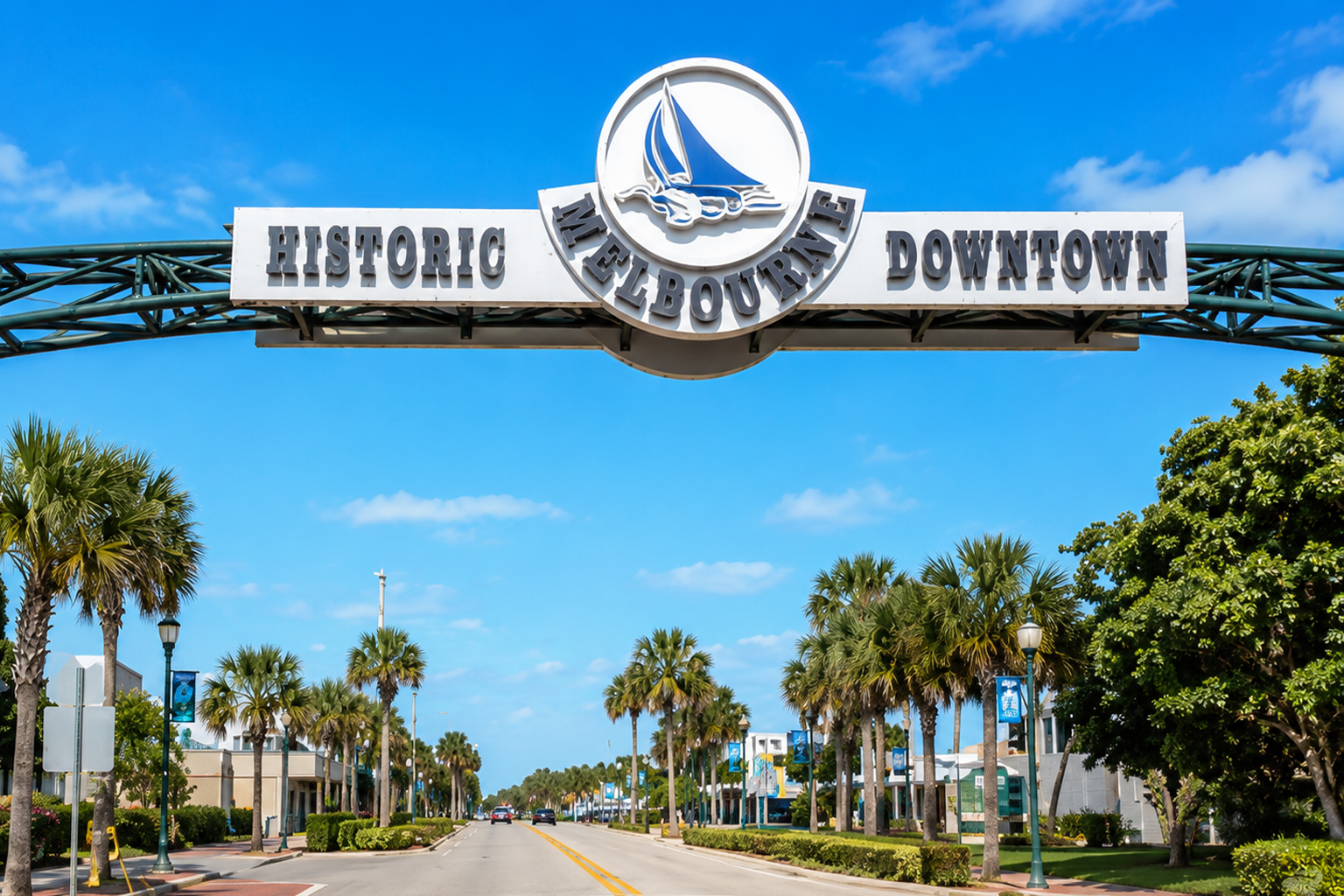
Melbourne is one of the most diverse places to live on Florida’s Space Coast.
Unlike a smaller beach town or a newer master-planned community, Melbourne is made up of many different neighborhoods, business districts, parks, waterfront areas, and housing styles. One part of the city may feel historic and walkable, while another offers quiet streets, larger lots, newer homes, or convenient access to major employers.
That variety is one of Melbourne’s greatest strengths.
Residents can enjoy dinner in Historic Downtown Melbourne, browse galleries in the Eau Gallie Arts District, attend an event at Florida Tech, kayak near the Indian River Lagoon, and reach the Atlantic Ocean without having to live directly on the barrier island.
For buyers who want convenient access to work, shopping, restaurants, healthcare, schools, and the beach, Melbourne offers a practical and well-rounded place to call home.
Melbourne Is Not Melbourne Beach
One of the first things to understand is that Melbourne and Melbourne Beach are two different communities.
Melbourne is primarily located on the mainland. Melbourne Beach is a smaller coastal town on the barrier island, south of Indialantic.
The Melbourne name is also used broadly in mailing addresses. A home can have a Melbourne mailing address without being located within the official City of Melbourne limits. Some properties may be in unincorporated Brevard County or close to another municipality.
This can affect property taxes, zoning, permitting, utilities, police and fire services, and other local regulations. The City of Melbourne recommends using its mapping system to confirm the zoning and land-use information for a specific property.
When buying a home, it is important to evaluate the exact address rather than relying only on the city name shown in the listing.
What Makes Melbourne Unique and Special?
What makes Melbourne special is the combination of history, culture, employment, education, outdoor recreation, and everyday convenience.
It is unusual to find a city of this size with two distinct historic commercial areas, an airport, a research university, aerospace and technology employers, river access, parks, golf, and beaches only a short drive away.
Historic Downtown Melbourne offers a walkable collection of locally owned restaurants, cafés, boutiques, entertainment venues, public art, and waterfront spaces. Downtown Melbourne currently promotes more than 40 restaurants and bars, along with shops, live entertainment, community events, and access to Crane Creek.
Farther north, the Eau Gallie Arts District has a different personality. Known locally as EGAD, the district includes galleries, restaurants, shops, historic buildings, public parks, murals, cultural spaces, and the Eau Gallie Square bandshell.
The ability to enjoy two very different local districts within the same city is one of the reasons people love Melbourne.
What Is It Like to Live in Melbourne?
Living in Melbourne can feel very different depending on the neighborhood you choose.
Some areas are close to downtown restaurants and local events. Others feel more suburban, with wider streets, established subdivisions, neighborhood parks, and convenient access to shopping.
There are also homes near Florida Tech, properties close to the Indian River Lagoon, golf-course communities, neighborhoods near Wickham Park, and larger residential settings around the Lake Washington area.
Melbourne generally offers more shopping, healthcare, employment, and dining options than Brevard County’s smaller coastal towns. It also provides easier access to Interstate 95 and major north-south roads.
The tradeoff is that Melbourne covers a larger area and is not uniformly walkable. In most neighborhoods, residents rely on a vehicle for work, errands, school, and entertainment.
The right section of Melbourne depends heavily on your commute, budget, preferred home style, school needs, and how close you want to be to downtown, the river, the airport, or the beach.
Homes and Neighborhoods in Melbourne
Melbourne offers one of the broadest selections of homes in Brevard County.
Buyers may find:
- Historic homes near downtown
- Mid-century concrete-block homes
- Traditional suburban neighborhoods
- Pool homes
- Townhomes and condominiums
- Gated communities
- Golf-course properties
- Newer construction
- Larger custom homes
- Riverfront and waterfront properties
- Homes with larger lots
- Investment properties near Florida Tech and employment centers
Older areas near Downtown Melbourne and Eau Gallie may contain homes with more character, mature landscaping, original architectural details, and convenient access to restaurants and cultural activities.
Neighborhoods developed during Brevard County’s aerospace expansion frequently contain one-story concrete-block homes with practical layouts, screened porches, terrazzo or tile flooring, garages, and established yards.
Newer communities may offer open floor plans, higher ceilings, modern kitchens, energy-efficient features, community pools, and HOA-maintained amenities.
The range is one of Melbourne’s biggest advantages, but it also means buyers need to compare properties carefully. Two homes with the same Melbourne address and similar prices may offer completely different locations, construction types, insurance costs, school assignments, and long-term resale potential.
Historic Downtown Melbourne
Historic Downtown Melbourne is one of the city’s most recognizable destinations.
The area has a walkable collection of locally owned restaurants, boutiques, antique shops, cafés, bars, entertainment venues, murals, and professional offices. Community events, festivals, markets, and seasonal celebrations are held downtown throughout the year.
Nearby residential streets include a mix of historic homes, cottages, mid-century properties, apartments, condominiums, and renovated residences.
Living near downtown can appeal to buyers who want more character and easier access to restaurants and events. However, buyers should consider traffic, parking, lot size, flood zones, property condition, and whether the home’s older systems have been updated.
Historic charm can add value, but older homes may require careful inspections of the roof, plumbing, electrical system, foundation, windows, and previous renovations.
The Eau Gallie Arts District
The Eau Gallie Arts District gives northern Melbourne its own creative center.
EGAD has a more artistic and eclectic atmosphere than Downtown Melbourne. Galleries, murals, restaurants, local businesses, historic properties, public spaces, and cultural events give the area a distinct personality.
The district also includes access to the Indian River Lagoon, the Eau Gallie Public Library and fishing pier, Eau Gallie Square, Pineapple Park, and nearby historic neighborhoods.
Buyers who enjoy art, architecture, local businesses, older neighborhoods, and a strong sense of place may be especially drawn to this part of Melbourne.
As with downtown, property condition can vary considerably. Some homes have been thoughtfully restored, while others may need substantial updating.
Florida Tech and the Aerospace Economy
Melbourne has a strong connection to engineering, aviation, technology, defense, and the aerospace industry.
Florida Institute of Technology is located near the center of the city and offers programs in engineering, science, aeronautics, business, and other fields. The university began as a night school created to educate people working in the early United States space program and has grown into a research university with its main campus in Melbourne.
The surrounding region is also home to major aerospace, defense, manufacturing, and technology employers.
This employment base attracts professionals relocating from across the country. It also creates demand for homes that offer practical commutes, home offices, strong internet access, airport convenience, and proximity to schools and daily services.
Melbourne Orlando International Airport
Melbourne Orlando International Airport is one of the city’s most convenient features.
The airport provides commercial air service, connections to additional destinations, rental cars, parking, and access to aviation-related employers. Flight routes and schedules change, so travelers should check the airport’s current flight information when planning a trip.
Living near a regional airport can be a major benefit for frequent travelers. However, buyers considering homes near the airport should pay attention to flight paths and potential aircraft noise at different times of day.
Parks, Recreation, and Outdoor Activities
Melbourne has an extensive park and recreation system.
The City of Melbourne maintains more than 232 acres of parks, including neighborhood parks, athletic facilities, playgrounds, fishing piers, boat ramps, swimming pools, tennis and pickleball courts, community centers, and other recreational spaces.
Residents can also enjoy golf, kayaking, fishing, youth sports, fitness programs, dog parks, community events, and access to the Indian River Lagoon.
Wickham Park is one of the best-known recreation areas in the greater Melbourne area. Its community center includes a full-size gymnasium and space for classes, camps, and community activities.
Melbourne is not directly centered around the ocean in the way Indialantic or Satellite Beach is, but the beaches are still close enough for residents to enjoy regularly.
Shopping, Dining, and Everyday Convenience
Melbourne offers a broad selection of grocery stores, restaurants, retail centers, medical offices, professional services, and entertainment.
Residents can choose between locally owned businesses in Downtown Melbourne and EGAD, larger shopping centers along major roads, and convenient commercial areas throughout the city.
This variety is especially helpful for buyers relocating from larger cities who may be concerned about giving up access to shopping, healthcare, dining, and professional services.
Melbourne provides more choices than many smaller Space Coast communities while still maintaining a relaxed coastal atmosphere.
Schools in Melbourne
Melbourne is served by Brevard Public Schools and includes numerous elementary, middle, and high-school attendance areas.
School assignments vary widely depending on the exact address. A Melbourne mailing address does not automatically indicate which schools serve the property.
Brevard Public Schools publishes current attendance-boundary maps, and families should verify the exact zoning directly with the district before purchasing a home.
Melbourne is also home to private-school options, technical education programs, Eastern Florida State College facilities nearby, and Florida Tech.
What Buyers Should Consider
Because Melbourne is so diverse, buyers should carefully evaluate both the home and its location.
Important considerations may include:
- Whether the property is inside city limits
- School zoning
- Distance to work
- Traffic patterns
- Flood zone and drainage
- Roof and insurance costs
- Plumbing and electrical systems
- HOA rules and fees
- Age of the neighborhood
- Airport or road noise
- Septic versus sewer
- Renovation history and permits
- Future development nearby
Older concrete-block homes can offer excellent value, established locations, and renovation potential. However, buyers should investigate cast-iron drain lines, older electrical panels, aging roofs, windows, HVAC systems, and unpermitted additions.
My architectural design background helps buyers look beyond cosmetic finishes and evaluate how a home actually functions. Floor-plan flow, natural light, room proportions, renovation feasibility, storage, outdoor connections, and future resale value all matter.
Who Is Melbourne Best For?
Melbourne may be a strong fit for:
- Professionals working in aerospace, technology, healthcare, or education
- Families who want access to schools, parks, and everyday conveniences
- Buyers comparing mainland and beachside living
- People who prefer established neighborhoods
- Buyers interested in historic or architecturally distinctive homes
- Retirees who want healthcare and shopping nearby
- Florida Tech employees, students, and families
- Frequent travelers who value a local airport
- Buyers who want to remain close to the beach without paying beachside prices
It may be less appealing to someone who wants to walk to the ocean, live in a small coastal town, or have a completely uniform master-planned neighborhood.
My Realtor Take on Melbourne
Melbourne offers more variety than almost any other community in Brevard County.
It has historic homes, suburban neighborhoods, newer communities, riverfront properties, cultural districts, employment centers, parks, shopping, healthcare, and quick access to the beaches.
The challenge is that there is no single Melbourne lifestyle.
A home near Downtown Melbourne will feel completely different from one near Wickham Park, Lake Washington, Florida Tech, or Eau Gallie. That is why understanding the neighborhood is just as important as evaluating the house.
The right Melbourne property should fit your commute, lifestyle, budget, maintenance expectations, and long-term plans.
Thinking about buying or selling a home in Melbourne? I can help you compare neighborhoods, evaluate older and newer homes, understand renovation potential, and choose a property that makes sense for both your lifestyle and future resale.

Join The Discussion