
 by
by 
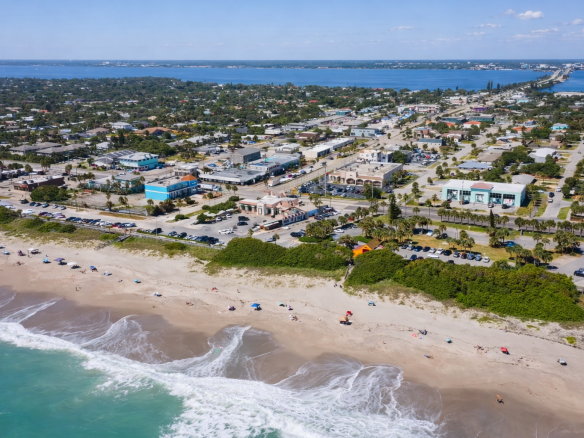
Buying a beachside home in Brevard County can be an incredible lifestyle decision, offering quick access to the Atlantic Ocean, the Indian River Lagoon, parks, restaurants, boating, and some of Florida’s most beautiful sunrises. But beachside ownership comes with a different set of financial, maintenance, insurance, and inspection considerations than buying a home on the mainland.
The key is not avoiding beachside homes. It is understanding the property’s flood zone, elevation, insurance options, roof and wind-mitigation features, salt-air wear, drainage, and long-term maintenance before you make an offer.
Quick Answer
Before buying a beachside home in Brevard County, verify the flood zone, request insurance quotes early, review the hurricane deductible, inspect the roof and wind-mitigation features, and look closely at windows, electrical systems, corrosion, drainage, seawalls, and docks when applicable.
A home in Satellite Beach, Indian Harbour Beach, Indialantic, Melbourne Beach, Cocoa Beach, Cape Canaveral, or Merritt Island may offer an amazing coastal lifestyle, but the best purchase is one that fits your budget for both the home and its ongoing coastal ownership costs.
Beachside Areas in Brevard County at a Glance
| Area | Lifestyle Highlights | Typical Home Types | Important Buyer Considerations |
|---|---|---|---|
| Cocoa Beach | Beach access, restaurants, surfing, recreation, proximity to Port Canaveral | Condos, beach cottages, canal homes, older single-family homes | Short-term rental rules, condo fees, insurance, parking, traffic |
| Cape Canaveral | Beach access, cruise-port proximity, restaurants, condo options | Condos, townhomes, beach cottages | Condo financials, master insurance, rental restrictions, wind coverage |
| Satellite Beach | Active coastal lifestyle, parks, athletic facilities, beach access | Single-family homes, canal homes, condos | Flood zone, roof, hurricane protection, salt-air maintenance |
| Indian Harbour Beach | Parks, beach access, community recreation, central beachside location | Single-family homes, townhomes, condos | Insurance costs, drainage, older-home systems, HOA restrictions |
| Indialantic | Walkable coastal feel, restaurants, beaches, proximity to Melbourne | Coastal cottages, renovated homes, condos, luxury homes | Limited inventory, flood risk, older construction, insurance |
| Melbourne Beach | Quieter coastal feel, ocean-to-river lifestyle, nature access | Beach cottages, luxury homes, riverfront and oceanfront homes | Coastal erosion, elevation, septic or sewer, insurance, dune regulations |
| Merritt Island | Larger lots, boating access, lagoon and canal homes | Waterfront homes, larger established homes, canal homes | Seawalls, docks, bridges, flood zones, boating depth, insurance |
1. The Exact Location Matters More Than the “Beachside” Label
Not every beachside home has the same flood exposure, insurance profile, elevation, or maintenance needs. A property one block from the ocean may have very different risks and costs than a home closer to the Indian River Lagoon, Banana River, canal system, or mainland side of a barrier-island community.
Before you fall in love with the finishes, ask for the property address, survey, flood-zone designation, and elevation information. These details can affect insurance availability, flood-insurance cost, future renovation plans, financing, and resale appeal.
2. Understand Flood Zones, Elevation, and Flood Insurance
Flood zones are an important starting point, but they are not the full picture. A property outside a high-risk flood zone can still experience flooding from heavy rainfall, storm surge, drainage issues, rising water, or nearby waterways.
Buyers should review the flood-zone designation, but also ask about the home’s elevation, prior flood claims, drainage history, and whether the seller has an elevation certificate. An elevation certificate can be especially valuable when comparing insurance options for coastal homes.
Flood Due-Diligence Checklist
| Item to Review | Why It Matters |
| FEMA flood zone | Helps identify mapped flood-risk areas and lender flood-insurance requirements |
| Elevation certificate | Can help insurance providers evaluate the home’s elevation and risk profile |
| Base flood elevation | Helps show how the finished floor elevation compares with mapped flood conditions |
| Prior flood history | Gives insight into previous water intrusion, claims, or drainage concerns |
| Survey | Confirms lot lines, easements, improvements, seawalls, docks, and setbacks |
| Drainage | Helps identify standing-water concerns, grading issues, and stormwater flow |
Do not assume that flood insurance will be inexpensive simply because a home is not directly on the ocean. Insurance pricing can vary by structure type, elevation, distance to water, foundation design, replacement cost, claims history, and insurer guidelines.
3. Get Insurance Quotes Before the End of Your Inspection Period
One of the biggest mistakes buyers make is waiting until the last few days before closing to investigate insurance. On a coastal property, insurance should be part of your early due diligence, just like inspections and financing.
Ask an insurance professional to review the specific address and provide estimates for homeowners insurance, flood insurance, wind coverage, deductibles, and any property-specific requirements. A home that looks like a great value can become much more expensive if the insurance profile is challenging.
Insurance Questions to Ask
| Question | Why It Matters |
| Is flood insurance required by the lender? | Required coverage can affect monthly and annual ownership costs |
| What is the hurricane deductible? | This is the amount you may be responsible for after a named storm loss |
| Does the policy include wind coverage? | Coastal homes need clear windstorm coverage details |
| What wind-mitigation credits may apply? | Qualifying features may reduce the wind portion of the premium |
| Are roof age or roof type concerns? | Some carriers have specific underwriting standards |
| Are there restrictions on older electrical or plumbing systems? | Older systems can affect insurability or premium cost |
| Is the property eligible for the carrier’s preferred policy? | Eligibility can impact price, coverage, and deductible options |
4. Wind Mitigation Can Make a Meaningful Difference
A wind-mitigation inspection documents features that can help a home perform better during high-wind events. These can include roof shape, roof-deck attachment, roof-to-wall connections, secondary water resistance, opening protection, and impact-rated windows or shutters.
A newer roof alone does not automatically mean a home has every available wind-mitigation credit. The roof installation, connections, documentation, and protection systems all matter.
Wind-Mitigation Features to Review
| Feature | What to Look For |
| Roof age | Verify the permit date, material, condition, and remaining useful life |
| Roof shape | Hip roofs may qualify for different mitigation credits than gable roofs |
| Roof deck attachment | Stronger attachment patterns may improve wind resistance |
| Roof-to-wall connection | Clips, single wraps, double wraps, or other connection details matter |
| Secondary water resistance | May reduce water intrusion risk if roof covering is damaged |
| Impact windows | Can improve protection and reduce reliance on manual shutters |
| Hurricane shutters | Confirm the system is complete, functional, and included with the home |
| Garage door | Verify impact rating, reinforcement, and condition |
Ask for a current wind-mitigation report whenever possible. If the report is older, incomplete, or unavailable, it may be worth scheduling a new inspection during your inspection period.
5. Salt Air Changes the Maintenance Plan
Living near the ocean means enjoying the breeze, but salt air can also accelerate corrosion and wear. Exterior hardware, HVAC equipment, pool equipment, railings, window frames, garage doors, outdoor lighting, plumbing fixtures, and metal roofing components may need more frequent maintenance than similar items on the mainland.
When you inspect a beachside home, look beyond the kitchen and bathrooms. Pay attention to exterior fasteners, railings, outdoor electrical panels, hose bibs, air-conditioning units, pool heaters, screen enclosures, window seals, and signs of rust or corrosion.
Beachside Maintenance Areas to Watch
- HVAC units and exterior condenser corrosion
- Rusted roof fasteners or flashing
- Window and door seal failure
- Corroded electrical panels, conduits, outlets, and fixtures
- Salt damage to garage doors, railings, gates, and fencing
- Exterior paint, stucco, trim, and siding wear
- Pool equipment and outdoor kitchen components
- Irrigation systems and landscape drainage
A well-maintained coastal home can perform beautifully for years. The key is choosing a home where the seller has stayed ahead of maintenance rather than deferred it.
6. Roof Age, Windows, and Hurricane Protection Matter
Roof condition is a major issue for any Florida home, but it is especially important near the coast. Buyers should verify the roof permit date, roof material, visible condition, prior repairs, and whether there are any signs of leaks, rusted fasteners, cracked seals, or storm-related wear.
For windows and doors, confirm whether the home has impact-rated openings, shutters, panels, or another approved protection system. Do not assume that a few impact windows mean the entire home is protected.
A full inspection should include the roof, attic, windows, doors, garage door, soffits, fascia, gutters, and exterior penetrations. These details matter for both insurance and storm readiness.
7. Waterfront Homes Require an Extra Layer of Due Diligence
Not every beachside home is waterfront, but many buyers consider oceanfront, riverfront, canal-front, or lagoon-front properties. These homes can be exceptional, but they require additional evaluation.
For a waterfront property, inspect the seawall, dock, boat lift, pilings, electrical service, water depth, navigability, permits, and maintenance history. A seawall or dock issue can be one of the largest unexpected expenses a waterfront buyer faces.
Waterfront Property Checklist
| Feature | What to Verify |
| Seawall | Age, visible cracking, leaning, erosion, prior repairs, permit history |
| Dock | Structural condition, permits, utilities, decking, pilings, boat lift |
| Water depth | Whether the water depth works for your boat and expected usage |
| Navigability | Bridge clearance, canal access, no-wake zones, route to open water |
| Shoreline | Erosion, mangroves, dune protections, maintenance limitations |
| Insurance | Flood, wind, dock, seawall, and water-related coverage details |
For oceanfront and riverfront homes, also consider how the property will function during storms, king tides, heavy rainfall, and long-term coastal maintenance.
8. Older Beachside Homes Need a More Detailed Inspection
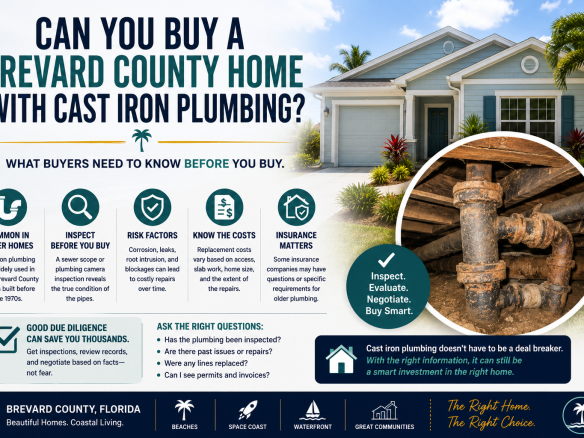
Many Brevard County beachside homes were built decades ago and have tremendous character, location, and renovation potential. But older homes may also have original plumbing, dated electrical panels, aging windows, cast-iron drain lines, older sewer or septic systems, or prior renovations completed without permits.
A standard home inspection is important, but it may not be enough. Depending on the property, buyers should consider a roof inspection, sewer scope, mold inspection, electrical evaluation, HVAC inspection, pool inspection, seawall inspection, or structural review.
Smart Inspections for a Beachside Home
- General home inspection
- Wind-mitigation inspection
- Four-point inspection, when needed for insurance
- Roof inspection
- Sewer scope for older homes
- HVAC inspection
- Electrical-panel evaluation
- Mold or moisture inspection when concerns are present
- Pool and spa inspection
- Seawall, dock, or boat-lift inspection for waterfront homes
9. Condos Need Different Due Diligence Than Single-Family Homes
A beachside condo can offer a lower-maintenance lifestyle and excellent location, but buyers need to review more than the unit itself. The financial condition of the association, insurance coverage, reserves, rental rules, pending repairs, special assessments, and building maintenance plans can affect both affordability and resale.
Before buying a condo, review the association documents, budget, reserves, insurance declarations, meeting minutes, rental restrictions, pet rules, and any known upcoming repair projects. The monthly condo fee is only one part of the ownership picture.
Condo Questions to Ask Before You Buy
- What does the monthly condo fee include?
- What is the association’s master insurance deductible?
- Are there planned assessments or major repairs?
- Are reserves funded appropriately?
- What are the rental rules and minimum lease periods?
- Are there pet restrictions?
- Are there pending lawsuits, inspections, or structural repairs?
- Does the association have any restrictions that could affect financing?
10. Think About Daily Lifestyle, Not Just the View
A beachside home may be beautiful, but you should also consider how the location works for everyday life. Test your commute, grocery routes, school or activity routes, bridge traffic, beach-event traffic, airport access, and storm evacuation routes.
Also consider beach access, parking, public beach activity, nearby restaurants, future construction, lot privacy, and whether the home has enough storage for bikes, paddleboards, surfboards, fishing gear, beach equipment, or a boat.
The best beachside home is not always directly on the ocean. Sometimes the best value is a well-maintained home a few blocks from the beach with a better lot, better elevation, more storage, lower insurance costs, and easier everyday access.
A Smart Timeline for Buying a Beachside Home
| Timing | Best Next Step |
| Before touring | Define your budget for home price, insurance, flood coverage, maintenance, and reserves |
| Before making an offer | Review flood-zone information, roof age, permits, and estimated insurance costs |
| During inspection period | Schedule inspections, request wind-mitigation information, and obtain insurance quotes |
| Before closing | Review final insurance binders, deductibles, flood coverage, HOA or condo documents, and utility details |
| After closing | Create a maintenance plan for roof, HVAC, exterior hardware, windows, drainage, and hurricane preparation |
Frequently Asked Questions
Is buying beachside in Brevard County worth it?
For many buyers, absolutely. Beachside living offers ocean access, outdoor recreation, coastal restaurants, parks, and a lifestyle that is difficult to duplicate elsewhere. The key is buying with realistic expectations about insurance, maintenance, storm preparation, and home condition.
Do all beachside homes require flood insurance?
Not all homes are required by a lender to carry flood insurance, but flood risk should be evaluated for every coastal property. Your lender, insurance professional, and flood-zone information can help determine what coverage is required and what coverage may still be wise.
What is the most important inspection for a beachside home?
There is no single inspection that replaces the others. A general inspection, roof inspection, wind-mitigation review, insurance review, and moisture evaluation are especially important. Waterfront homes may also need seawall, dock, boat-lift, or shoreline evaluations.
Are impact windows worth it in Brevard County?
Impact windows can provide daily convenience, storm protection, noise reduction, and potential insurance benefits. However, buyers should verify whether every opening is protected and whether the specific home qualifies for available wind-mitigation credits.
Should I buy an older beachside home?
Older beachside homes can be excellent opportunities because they often offer great lots, established locations, and strong renovation potential. Just make sure your inspections cover the systems that matter most, including roof, plumbing, electrical, windows, drainage, and moisture.
Final Thoughts
Buying a beachside home in Brevard County is about more than finding the best ocean view. It is about understanding the property’s long-term ownership costs, flood and insurance profile, structural condition, maintenance needs, and everyday lifestyle fit.
With the right due diligence, buyers can confidently enjoy everything beachside living has to offer in Satellite Beach, Indian Harbour Beach, Indialantic, Melbourne Beach, Cocoa Beach, Cape Canaveral, and Merritt Island.
Thinking about buying beachside in Brevard County? I can help you compare neighborhoods, review flood and insurance considerations, evaluate waterfront features, and identify homes that fit both your lifestyle and long-term goals.

Join The Discussion